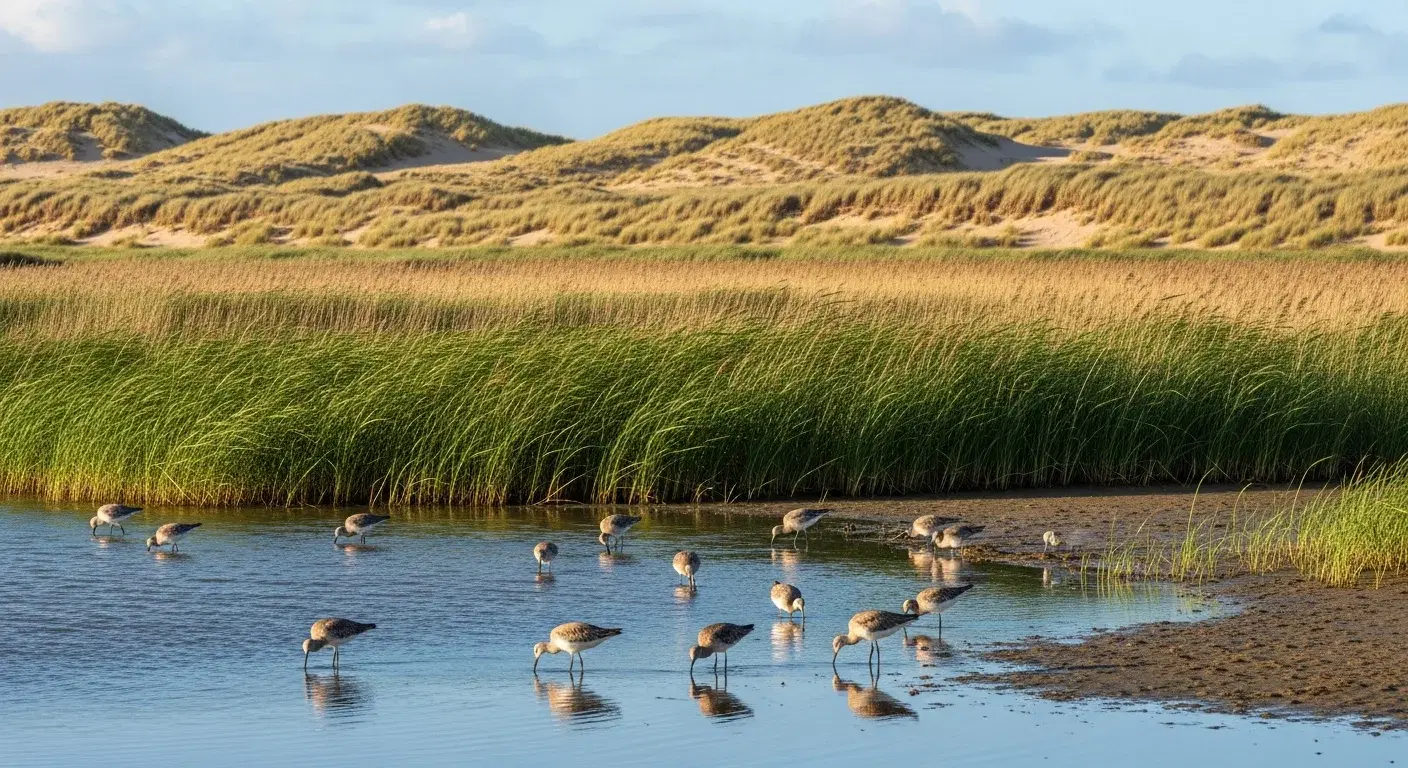
Druridge Bay: The Wildlife Hotspot Near Morpeth
A guide to the nature reserves and birdwatching sites along Druridge Bay, one of Northumberland's richest wildlife areas, and an easy day trip from Morpeth.
About nine miles east of Morpeth, the Northumberland coast opens up into Druridge Bay, a sweeping, seven-mile arc of sand backed by dunes, wetlands, and a chain of nature reserves that together form one of the richest wildlife-watching areas in the North East. Managed largely by the Northumberland Wildlife Trust, the bay's reserves attract birdwatchers from across the country, particularly in winter when migrant species arrive in large numbers.
For anyone living in or visiting Morpeth, Druridge Bay is one of the finest natural attractions within easy reach.
The Reserves
The Northumberland Wildlife Trust manages six nature reserves along the Druridge Bay coast. Three are particularly well-known and accessible:
Druridge Pools
A former opencast coal mine bought from British Coal in 1987, Druridge Pools has been transformed into a mosaic of open water, reedbeds, and scrubland that supports a wide variety of bird species. In winter, large flocks of wigeon, teal, and goldeneye gather on the pools, and the reedbeds are home to water rails and reed buntings.
The reserve has well-maintained hides overlooking the main pools, making it an excellent site for quiet, comfortable birdwatching. A circular walk takes in the key viewpoints.
Best for: Druridge Pools, a former coal mine transformed into one of the North East's best birdwatching sites.
East Chevington
Widely considered one of the best birdwatching sites in the county, East Chevington features large lakes that attract breeding terns in summer and vast flocks of pink-footed geese in autumn. Water rails and snipe are present in the wetter areas, while spring and autumn migration periods bring a wide range of passage birds.
The reserve has hides overlooking the main lake, and the mix of habitats, open water, scrub, grassland, and dune, supports a diverse range of species throughout the year.
Hauxley
At the northern end of Druridge Bay, Hauxley is the Northumberland Wildlife Trust's flagship reserve. The modern visitor centre, built from recycled materials, serves as both a gateway to the reserve and an example of sustainable construction.
Hauxley provides quality birdwatching throughout the year. In 2024, a total of 155 different bird species were recorded at the reserve, ranging from common garden birds to rarities such as velvet scoters and white-billed divers. The reserve is quietest in summer and at its best in winter, when the pools and coast attract large numbers of wildfowl and waders.
Red squirrels are also seen at Hauxley, often visiting the feeders near the car park.
Best for: 155 bird species were recorded at Hauxley in a single year, from blue tits to white-billed divers.
What to Look For
Druridge Bay's wildlife changes with the seasons. Here is a rough guide to what you might see:
Winter (November to February)
This is the peak season for birdwatching along the bay. Look for:
- Divers, black-throated, great northern, and red-throated divers offshore
- Grebes, red-necked and Slavonian grebes
- Sea ducks, eider, long-tailed duck, goldeneye, and scaup
- Wildfowl, whooper swans, pink-footed geese, wigeon, teal, shoveler, and pintail
- Shore birds, Snow Buntings, Shore Larks, Twite, and Rock Pipits along the dunes and strand line
Winter is also the best time to spot smew, the handsome black-and-white duck that is a scarce but regular winter visitor to the pools.
Spring and Autumn (March to May, August to October)
Migration periods bring passage waders, terns, and passerines. Ospreys are occasionally seen passing through. Autumn sees spectacular skeins of pink-footed geese arriving from Iceland, and the scrub areas can hold migrant warblers and flycatchers.
Summer (June to July)
Breeding season is quieter for casual birdwatching, but terns nest at East Chevington and the dunes support nesting ringed plovers. Butterflies and dragonflies are abundant around the pools.
Getting There from Morpeth
Druridge Bay is approximately nine miles east of Morpeth. The main reserves are accessed from minor roads off the A1068 coast road:
- Druridge Pools, signed from the A1068 south of Cresswell
- East Chevington, accessed via a track off the A1068
- Hauxley, follow signs to Hauxley from the A1068 north of Druridge
The drive from Morpeth takes around 20 minutes. There is free parking at all three reserves. The sites are also accessible by bicycle along quiet country lanes.
Practical Tips
- Bring binoculars, essential for the hides and coastal watching
- Dress warmly in winter, the coast can be bitterly cold with an onshore wind
- Check tides, some coastal species are best seen at certain tidal states
- Visit early, early morning tends to produce the best sightings
- Combine reserves, all three main sites can be visited in a single day trip
For those interested in other wildlife walks near Morpeth, see our guides to the best walks from Morpeth and Carlisle Park.
Visiting
| Detail | Info |
|---|---|
| Distance from Morpeth | Approximately 9 miles east |
| Driving time | Around 20 minutes |
| Parking | Free at all reserves |
| Facilities | Visitor centre and toilets at Hauxley; hides at all three reserves |
| Best season | Winter for wildfowl and divers; spring/autumn for migrants |
| Dogs | Check individual reserve policies; some areas have restrictions during breeding season |
Druridge Bay is one of Northumberland's great natural treasures, and it is right on Morpeth's doorstep.
Get in touch if you have wildlife sightings or tips about Druridge Bay to share.
Never miss what’s on
Join the weekly Morpeth.net digest — the best events, news and local tips, straight to your inbox. Free, one email a week.
What's On
Morpeth Wednesday Market
9:00am - 3:30pm · Market Place, Morpeth, NE61 1HG
October Quiz Night at Morpeth RFC
8:30 PM · Morpeth RFC, Grange House Fields, Mitford Road, Morpeth, NE61 1RJ
Halloween Spooktacular at Whitehouse Farm
See booking · Whitehouse Farm Centre, Stannington, Morpeth, Northumberland, NE61 6AW