Morpeth Castle: History of the Ruins
The story of Morpeth Castle, from its Norman motte built by William de Merlay to the 14th-century gatehouse, Civil War siege, and restoration by the Landmark Trust.
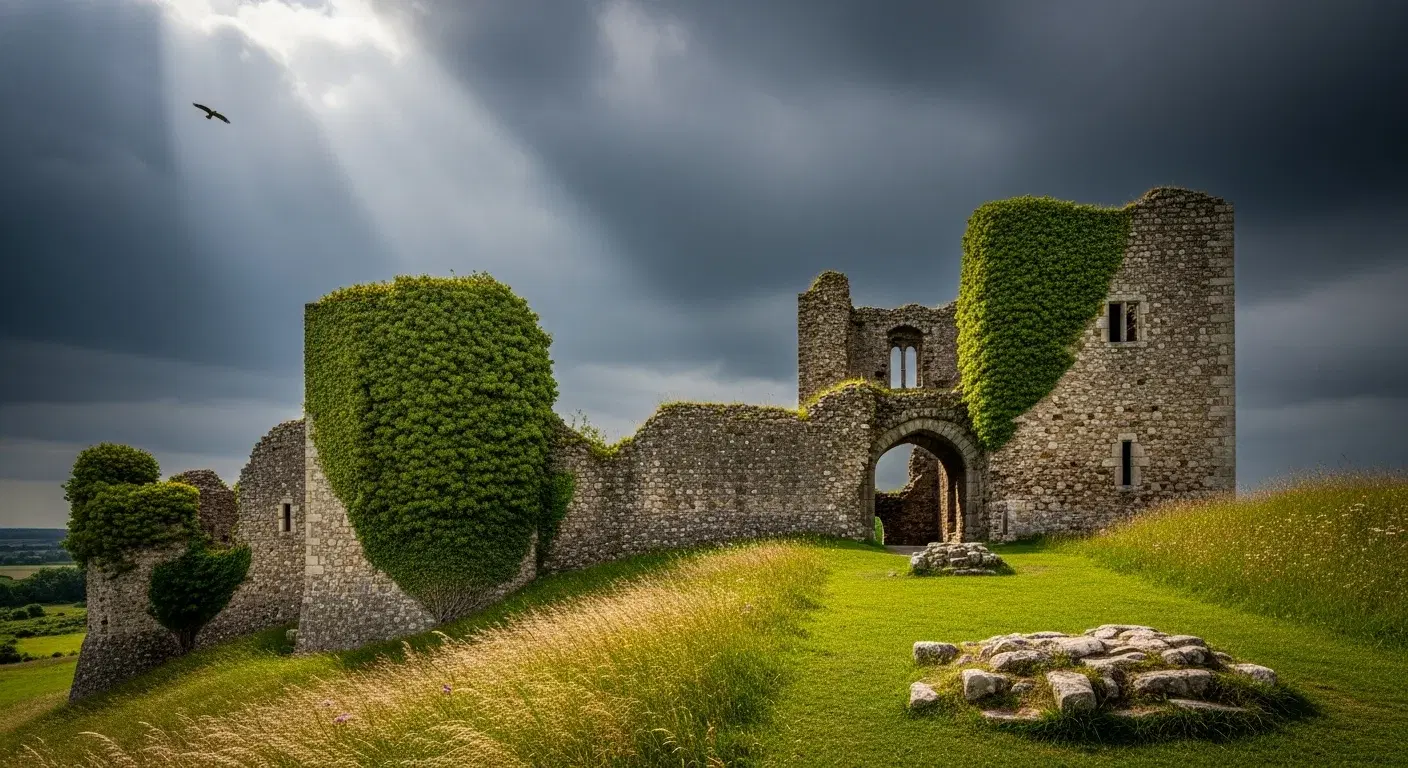
The ruins of Morpeth Castle sit within the grounds of Carlisle Park, overlooking the River Wansbeck from a commanding position above the town. Though only the gatehouse and fragments of curtain wall survive today, the castle's history spans nearly a thousand years, from the Norman Conquest to the English Civil War and beyond.
The Norman Origins
The story begins in 1080, when William de Merlay was rewarded for his part in suppressing a Northumbrian rebellion with the Barony of Morpeth, a vast estate stretching from the Tyne to the Coquet. By 1095, a motte-and-bailey castle had been constructed on what is now known as Ha' Hill, the steep earthwork mound that still dominates the western end of Carlisle Park.
Ha' Hill is a classic Norman motte, a man-made mound topped with a wooden and later stone fortification. The climb to the summit is short but steep, and the views over the Wansbeck valley and the town centre reward the effort.
Best for: Ha' Hill is one of the best-preserved Norman mottes in Northumberland, and you can climb it freely within Carlisle Park.
The De Merlay Dynasty
The de Merlay family held the barony for nearly two centuries. William de Merlay the second is recorded as completing work on the castle around 1170. The family's influence shaped the early development of Morpeth as a market town, and their original timber castle on Ha' Hill was likely replaced in stone during the 12th century.
In 1271, the barony passed from the de Merlays to the Greystoke family through marriage, beginning a new chapter in the castle's history.
The 14th-Century Gatehouse
The most significant surviving structure is the gatehouse, built by William Lord Greystoke, known as the Good Baron, between 1342 and 1359. A new castle was constructed in the bailey of the original Norman fortification, though little of that structure survives apart from the gatehouse and fragments of the curtain wall.
The gatehouse is an imposing building of three storeys. An unusual arrangement on the first floor suggests it served as a courtroom where the baron dispensed justice. The building is Grade I listed and remains one of Morpeth's most important medieval structures.
The Civil War Siege of 1644
The castle saw its most dramatic episode during the English Civil War. In 1644, a garrison of 500 Lowland Scots held Morpeth Castle for Parliament, defending it for 20 days against a Royalist force of 2,700 men led by the Marquis of Montrose and Sir Robert Clavering.
The Royalists eventually prevailed, capturing the castle and forcing Parliament's Lord Leven to divert troops to secure his lines of communication with Scotland. The siege caused extensive damage to the castle structures, and it never recovered its former military importance.
Much of what visitors see today as ruined walls dates its destruction to this siege. After the Civil War, the castle was largely abandoned as a military fortification.
Decline and Restoration
Following the Civil War damage, the castle fell into progressive ruin. The gatehouse received heavy restoration in 1857-58 for the Earl of Carlisle, including work to the parapets and corner turrets. Further restoration followed in the late 19th century.
In 1989-90, the Landmark Trust undertook a careful restoration of the gatehouse, converting it into a holiday let. Today you can actually stay overnight in this medieval building, a rare opportunity to sleep within a 14th-century fortification. The Trust's work preserved the historic fabric while making the building habitable.
Best for: You can stay in Morpeth Castle gatehouse. It is available as a Landmark Trust holiday rental.
What to See Today
A visit to the castle ruins within Carlisle Park takes in several distinct features:
- Ha' Hill, the Norman motte, climbable via a steep path. The flat summit offers panoramic views
- The Gatehouse, the imposing 14th-century structure, Grade I listed, now a Landmark Trust property
- Curtain wall fragments, sections of the castle's outer defensive wall survive along the hillside
- The bailey, the flat area between Ha' Hill and the gatehouse where the medieval castle complex once stood
The ruins are freely accessible within Carlisle Park's opening hours. There are information boards on site explaining the castle's history.
Visiting
| Detail | Info |
|---|---|
| Location | Within Carlisle Park, off Castle Square, Morpeth |
| Access | Free, open during park hours |
| Parking | Gas House Lane car park (free) |
| Time needed | 30-45 minutes to explore the ruins and climb Ha' Hill |
| Accessibility | Ha' Hill is steep and uneven; the gatehouse exterior can be viewed from the path |
The castle is best visited as part of a wider exploration of Carlisle Park, which also includes the William Turner Garden, the aviary, riverside walks, and the paddling pool.
Get in touch if you have historical information or photographs of Morpeth Castle to share.
Never miss what’s on
Join the weekly Morpeth.net digest — the best events, news and local tips, straight to your inbox. Free, one email a week.
What's On
Morpeth Wednesday Market
9:00am - 3:30pm · Market Place, Morpeth, NE61 1HG
October Quiz Night at Morpeth RFC
8:30 PM · Morpeth RFC, Grange House Fields, Mitford Road, Morpeth, NE61 1RJ
Halloween Spooktacular at Whitehouse Farm
See booking · Whitehouse Farm Centre, Stannington, Morpeth, Northumberland, NE61 6AW