The Lost Buildings of Morpeth
From the medieval bridge that once carried the road north to a vanished cinema, a demolished Victorian villa and a Gothic gaol turned into flats, here are the Morpeth landmarks that time and the demolition men changed forever.
Every town carries the ghosts of buildings that are no longer there, and Morpeth is no exception. Fires, floods, the railways and the demolition men have all taken their toll on the town's fabric over the centuries. Some structures vanished entirely, others were remade into something new, and a few survive only as fragments in the river or as masonry buried inside later walls. Here are some of the Morpeth landmarks that have been lost or transformed beyond recognition.
The Old Bridge over the Wansbeck
For centuries the way into Morpeth from the south crossed the River Wansbeck on a medieval stone bridge, a multi-span structure dating from the 13th century. It carried the main road north towards Scotland and stood beside the Chantry chapel. In 1835 it was partly demolished and replaced by a new bridge downstream, the one usually associated with the great engineer Thomas Telford. The abutments and central pier of the old bridge still stand a few metres high in the river, now topped by a Victorian footbridge, a rare survival of Morpeth's medieval crossing.
Best for: spotting a ghost: the stumps of the medieval bridge still stand in the Wansbeck.
The Coliseum Cinema
Generations of Morpeth people spent their evenings at the Coliseum Cinema, which opened in 1926. Its architect also designed the original Sanderson Arcade, and the picture house had stalls, a circle and a café. It closed as a cinema around 1964 and was converted into a bingo club, then later split between a gym and retail units, with a twin-screen cinema surviving upstairs for a time before films finally ceased in 2000. The building did not vanish, but the cinema certainly did. It reopened in 2011 as The Electrical Wizard, a pub whose name nods to the early days of electric moving pictures.
The gaol that became apartments
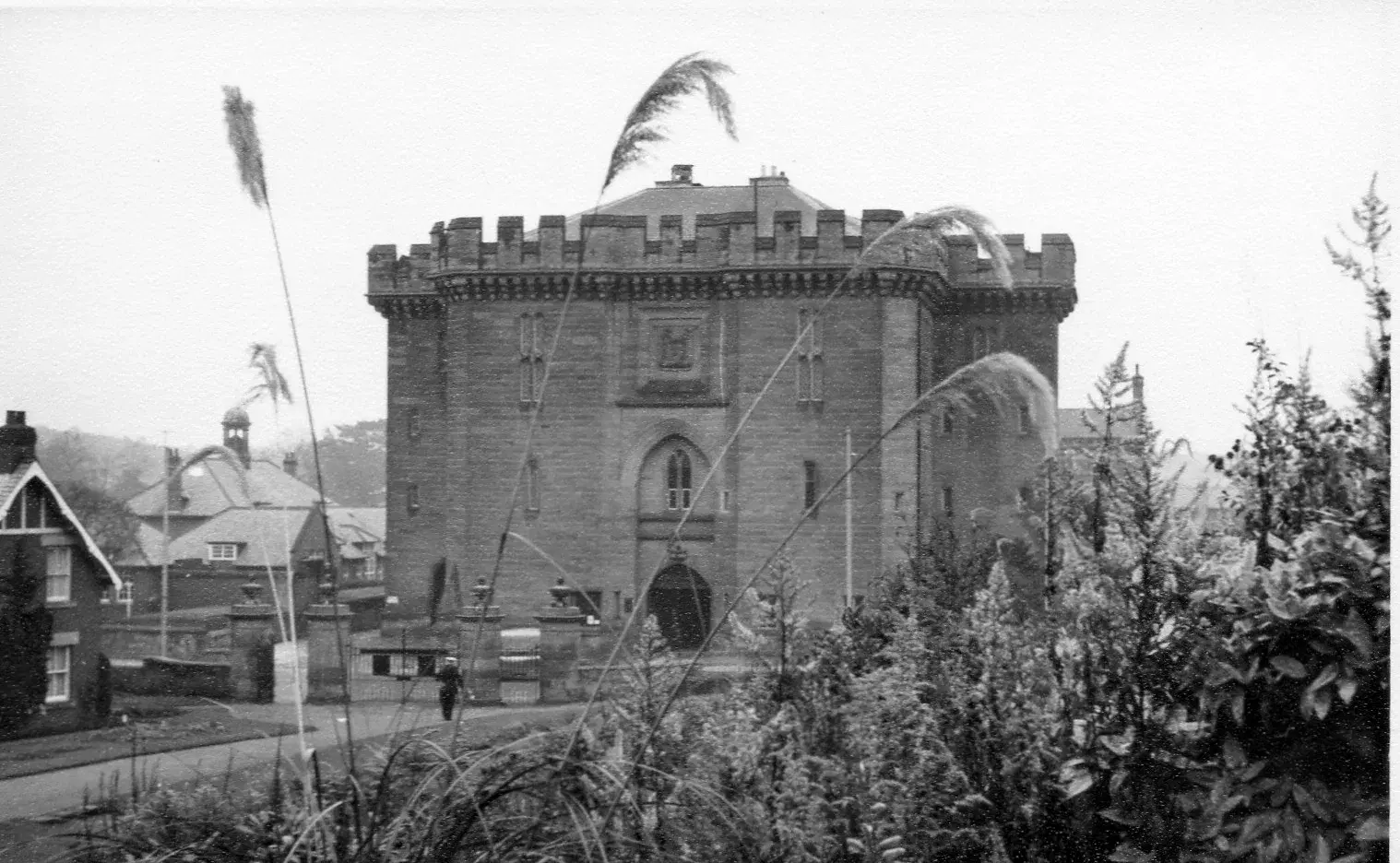
Morpeth was for a long time a place of imprisonment. The Gothic Revival Morpeth Court, better known as the old county gaol, was built in 1828 to a design by the celebrated Newcastle architect John Dobson, replacing earlier lock-ups at the castle and on Bridge Street. It cost the enormous sum of £71,000 and had an octagonal outer wall around a rectangular prison block. The prison closed in 1881 when its inmates were moved to Newcastle, and the cell block was later demolished. The surviving courthouse served as a magistrates' court until 1980, then passed through life as a nightclub and a health club before being converted into apartments. The forbidding gaol behind it is gone.
Best for: a change of fortune: a county gaol by John Dobson now given over to flats.
The Willows and Beechfield
On the south side of Gas House Lane stood a pair of substantial villas, the Willows and Beechfield, built in 1853 for two prosperous Morpeth businessmen. Over the years the county council took them on, and during the Second World War they housed air-raid precautions staff and the Red Cross. From the 1950s the library service used them. The great flood of 2008 left the buildings abandoned, and after years standing empty they were finally demolished in 2019 to make way for a new leisure centre. It is a reminder that not all of Morpeth's losses are ancient.
Newminster Abbey
Just west of the town lie the scant remains of Newminster Abbey, once one of the great religious houses of the North. Founded in 1138 by Ranulf de Merlay and his wife Juliana as a daughter house of Fountains Abbey, it was among the earliest Cistercian monasteries in northern England. It was dissolved in 1537 under Henry VIII, and its stone was gradually carted away and reused, some of it, it is said, finding its way into the town's Clock Tower. Only low walls and grassed-over foundations survive of what was once a thriving abbey.
The medieval castle
Even Morpeth's castle counts among its lost buildings. A motte-and-bailey fortress was raised in the late 11th century, replaced by a stone castle in the 13th century on the wooded hill above the town. Most of it fell into ruin long ago, and what remains is largely the inner gatehouse, rescued and restored by the Landmark Trust. You can stay a night in the gatehouse, but the walls, towers and halls that once surrounded it have gone, leaving grassy earthworks where a great fortress stood.
Frequently asked questions
Is any of Morpeth's medieval bridge still standing? Yes. The old bridge over the River Wansbeck was partly demolished in 1835 when a new bridge was built downstream, but the abutments and central pier still stand a few metres high in the river. A 19th-century footbridge now sits on top of the medieval remains, just below the Telford bridge.
What happened to Morpeth's old cinema? The Coliseum Cinema opened in 1926 and closed as a full cinema around 1964, becoming a bingo hall and later a mix of gym and retail, with a small twin-screen cinema lasting until 2000. The building survives as The Electrical Wizard, a Wetherspoon pub that opened in 2011.
Where was the old Morpeth gaol? The county gaol, Morpeth Court, was built in 1828 by the architect John Dobson near Bridge Street. The prison closed in 1881 and the cell block was demolished, while the surviving courthouse was later converted into apartments. Its masonry and setting hint at the imposing prison that once stood there.
Have a suggestion? Get in touch.
Never miss what’s on
Join the weekly Morpeth.net digest — the best events, news and local tips, straight to your inbox. Free, one email a week.
What's On
October Half Term Crafts at Wallington
11:00 AM - 3:00 PM · Wallington, Cambo, near Morpeth, Northumberland, NE61 4AR
Morpeth Wednesday Market
9:00am - 3:30pm · Market Place, Morpeth, NE61 1HG
Kids Wildlife Photography at Wallington
1:30 PM - 2:45 PM · Wallington, Cambo, near Morpeth, Northumberland, NE61 4AR