William Turner: The Father of English Botany Was Born in Morpeth
William Turner, the man who wrote the first proper English-language herbal and democratised botanical knowledge, was born in Morpeth around 1508. His legacy lives on in Carlisle Park.
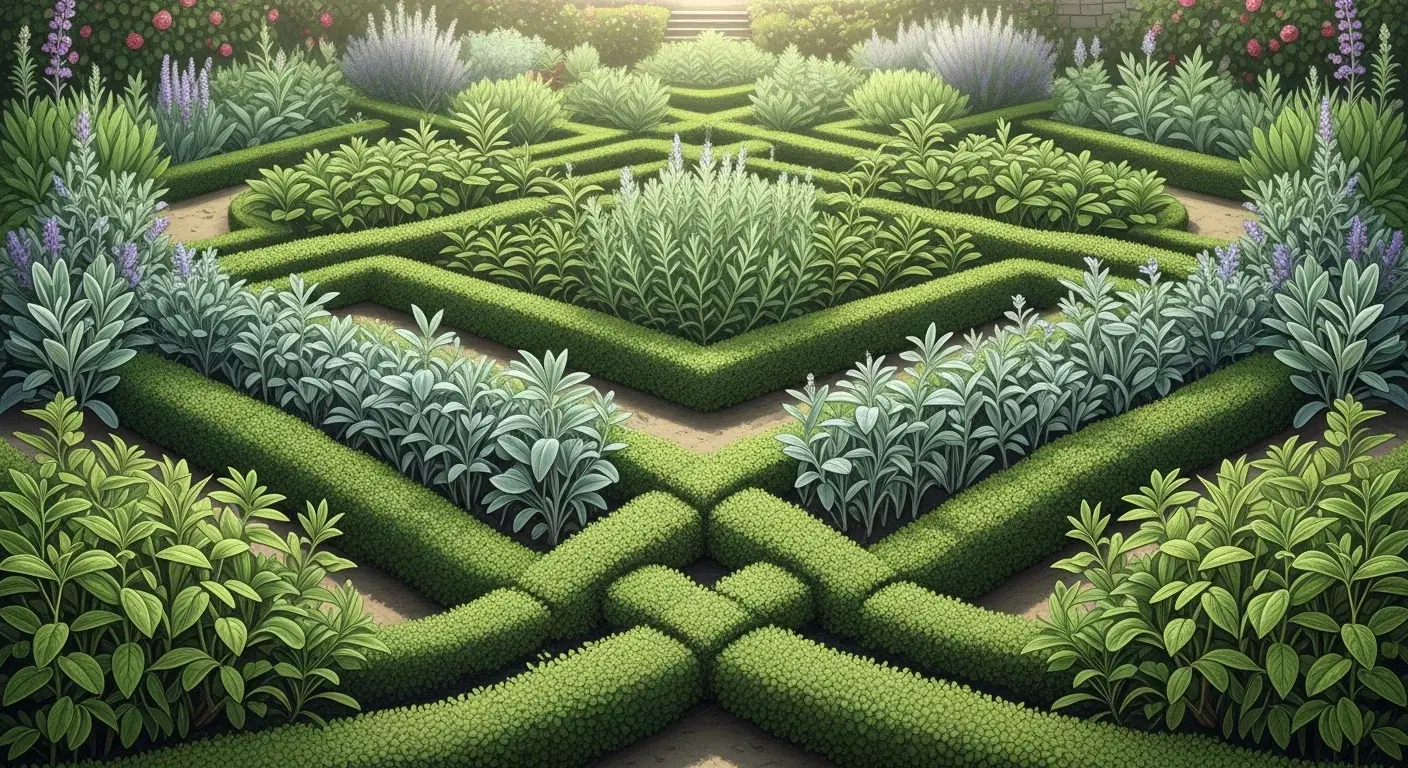
In the grounds of Carlisle Park, tucked below the castle ruins and overlooking the River Wansbeck, is the William Turner Garden, a quiet, beautifully planted space dedicated to a man who changed the way we understand the natural world. William Turner, widely known as the "father of English botany", was born in Morpeth around 1508. His decision to write about plants in English rather than Latin opened up botanical knowledge to ordinary people for the first time.
Early Life in Morpeth
William Turner was born in Morpeth around 1508, the son of a tanner. Little is known about his earliest years, but he was educated at the Chantry, which at that time served as Morpeth's grammar school. It was a modest beginning for a man who would become one of the most important natural scientists of the Tudor period.
From Morpeth, Turner went on to study at Pembroke Hall, Cambridge, where he developed his twin passions for the natural sciences and religious reform. He became a fellow of the college and began the botanical studies that would define his career.
Best for: Turner was educated at the Chantry in Morpeth, the 13th-century bridge chapel that now houses the Bagpipe Museum.
Why He Matters
Before Turner, knowledge of plants in England was largely derived from ancient Greek and Roman texts, supplemented by medieval manuscripts that were often unreliable, contradictory, and written exclusively in Latin. Apothecaries and physicians relied on these texts to identify medicinal plants, but the descriptions were frequently so vague or inaccurate that misidentification was common, with potentially dangerous consequences.
Turner set out to change this. His dissatisfaction with the existing herbals led him to begin his own systematic study of plants, based on first-hand observation rather than inherited authority. Crucially, he chose to write in English, the vernacular, so that his work would be accessible to the medical practitioners, apothecaries, and gardeners who actually needed it, not just to university-educated scholars who could read Latin.
This was a radical decision. In the 16th century, serious scientific work was conducted in Latin. By writing in English, Turner democratised botanical knowledge.
A New Herball
Turner's masterwork was A New Herball, published in three parts between 1551 and 1568. It was the first English-language herbal to be based on original observation and systematic research rather than mere repetition of classical sources.
The first part appeared in 1551, the second in 1562, and the third in 1568, the year of Turner's death. Together, the three volumes described 238 native British plants, with detailed observations drawn from Turner's own fieldwork across England and continental Europe.
The herbal included plant names in English, Latin, Greek, French, and German, making it a practical reference for an international audience. Turner's descriptions were clear and precise, a marked improvement on the vague accounts found in earlier works. The woodcut illustrations, though largely adapted from continental sources, helped readers identify plants with a confidence that had not previously been possible.
Best for: A New Herball (1551-1568) was the first English-language herbal based on original field observation, a landmark in scientific publishing.
A Life of Exile and Return
Turner's life was shaped by the religious upheavals of the 16th century as much as by his botanical work. A committed Protestant reformer, he was forced into exile during the reign of Henry VIII and again under Mary I. During these periods on the continent, he studied at universities in Italy and Germany, expanding his botanical knowledge through direct observation of European flora.
Under Edward VI, Turner was appointed Dean of Wells Cathedral in 1551, where he established a herbal garden. He lost this position under Mary I and fled to the continent, returning after the accession of Elizabeth I in 1558. He was reinstated as Dean of Wells in 1560 and held the position until 1564.
Turner died in London on 13 July 1568, shortly after the publication of the final part of his herbal.
The William Turner Garden
Turner's connection to Morpeth is commemorated in the William Turner Garden in Carlisle Park. The garden was created to celebrate his life and work, and it is planted with many of the species he described in A New Herball.
The garden occupies a terraced site below Morpeth Castle, with views across the Wansbeck. It is a peaceful and attractive space, and one that makes a fitting tribute to a man who spent his life observing, recording, and sharing the plant world.
The garden is free to visit and is open during Carlisle Park's normal hours. It is well worth seeking out, whether you are interested in botanical history or simply looking for a quiet corner of the park.
Visiting
| Detail | Info |
|---|---|
| William Turner Garden | Within Carlisle Park, below the castle ruins |
| Access | Free, open during park hours |
| The Chantry | Bridge Street, Turner's grammar school, now home to the Bagpipe Museum |
| Best time to visit | Late spring through summer, when the garden is in full flower |
Turner's legacy extends far beyond Morpeth, but the town has good reason to claim him. The father of English botany started here.
Get in touch if you have information about William Turner's connection to Morpeth to share.
Never miss what’s on
Join the weekly Morpeth.net digest — the best events, news and local tips, straight to your inbox. Free, one email a week.
What's On
Morpeth Wednesday Market
9:00am - 3:30pm · Market Place, Morpeth, NE61 1HG
October Quiz Night at Morpeth RFC
8:30 PM · Morpeth RFC, Grange House Fields, Mitford Road, Morpeth, NE61 1RJ
Halloween Spooktacular at Whitehouse Farm
See booking · Whitehouse Farm Centre, Stannington, Morpeth, Northumberland, NE61 6AW