The History of Morpeth's Shopping Streets
How Bridge Street, Newgate Street, Oldgate and the Market Place grew from a medieval market town into the shopping quarter Morpeth knows today, still gathered around the Clock Tower.
Morpeth has been a place to buy and sell for more than eight hundred years. King John granted the town its market charter in 1200, and by the middle of the 1700s Morpeth was one of the busiest markets in England, a key stop for the drovers bringing Scottish cattle south. That trading history is written into the shape of the town centre, where three ancient streets still fan out from the Market Place and the Clock Tower. Here is how Morpeth's shopping streets came to be.
The Market Place at the heart of it all
Everything in old Morpeth radiated from the Market Place. This is where the cattle, corn and cloth changed hands, where fairs were held, and where the town's civic life was centred. From here the three principal streets, Bridge Street, Newgate Street and Oldgate, strike off in different directions, each lined with the long narrow burgage plots that medieval traders were granted so they could run a shop at the front and workshops or gardens behind. That pattern still shows in the deep, thin buildings you find along the streets today.
Best for: understanding the town: stand in the Market Place and every old street leads away from you.
Bridge Street, the road to the river
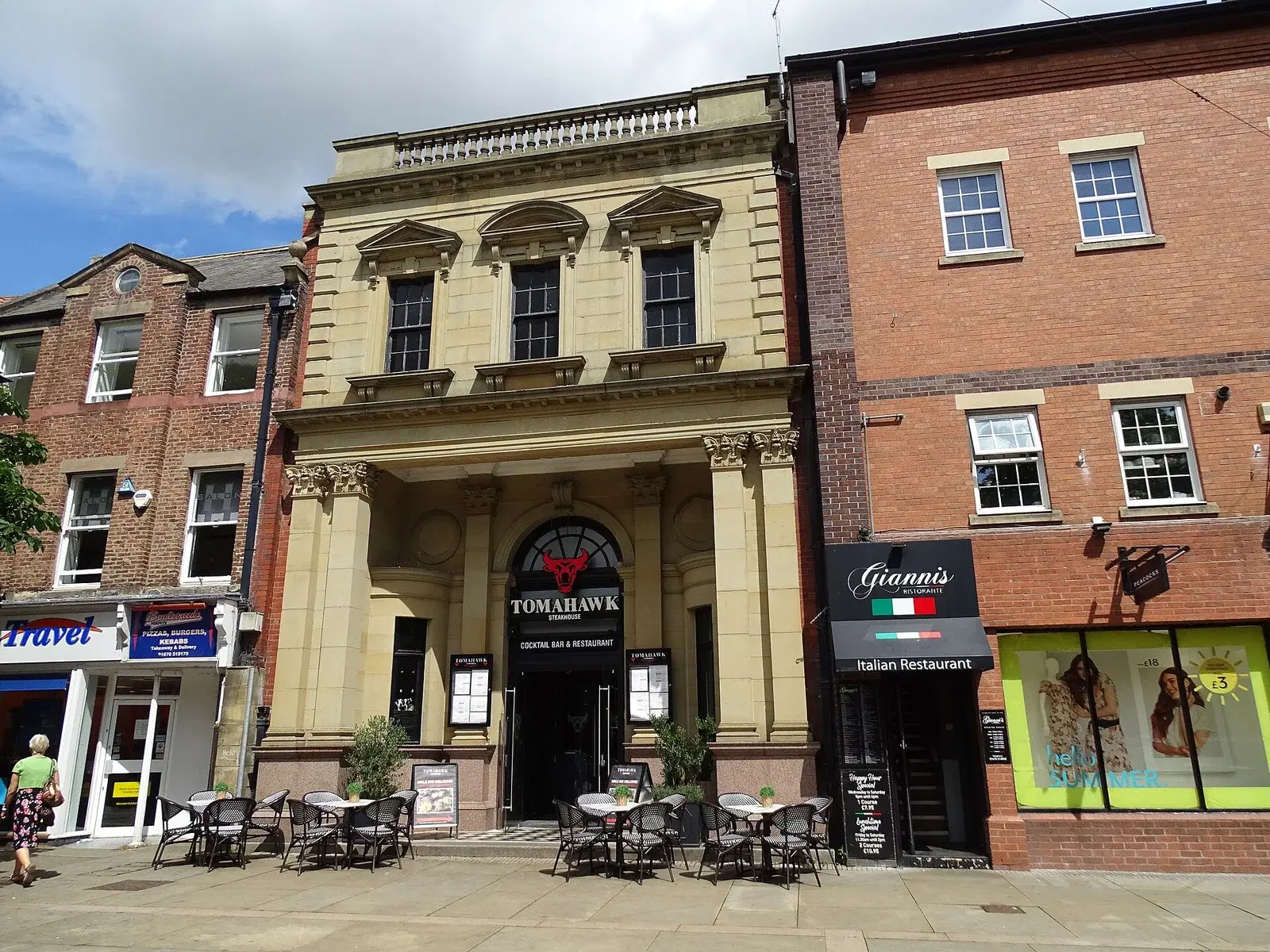
Bridge Street takes its name from the crossing of the River Wansbeck at its southern end, where a two-arched stone bridge stood from the 13th century. As the route to the river and the world beyond, it became the town's principal thoroughfare, and it remains Morpeth's main shopping street. The medieval Chantry chapel still stands at its foot near the water, and the Clock Tower, built in the early 1600s, presides over the top of the street where it meets Oldgate. Many of the buildings along Bridge Street are listed, their Georgian and Victorian frontages hiding much older bones.
Newgate Street and the eastern trade
Newgate Street runs east from the Market Place and was, as the name suggests, the way to one of the town's medieval gates. It grew into a busy trading street of shops, inns and merchants' houses, and it keeps that role today. Some of its buildings are listed for their Georgian architecture, a reminder of the prosperity Morpeth enjoyed as a coaching town on the Great North Road, when travellers and their horses needed feeding, watering and lodging.
Oldgate and Admiral Collingwood
Oldgate is the oldest of the three streets by name, and among its residents was Vice Admiral Cuthbert Collingwood, Nelson's second-in-command at Trafalgar, who kept a house here and loved the town dearly. The street still has the feel of Morpeth's quieter, more residential side, with the Oldgate Tavern among the places that carry the old street name forward. The Clock Tower stands at the junction where Oldgate meets Bridge Street, a fixed point the town has organised itself around for four centuries.
The railways and a changing market
The arrival of the railways in the 19th century reshaped trade across the country, and Morpeth's ancient cattle and produce market gradually declined as livestock could be moved far more easily by rail. The town adapted, and the streets that had once bustled with drovers and coaching traffic became a shopping centre serving the surrounding countryside. The weekly market survived, and a Wednesday market still runs on Bridge Street, with a monthly farmers' market keeping the old trading spirit alive.
Sanderson Arcade, old and new
Shopping in Morpeth got a boost with the Sanderson Arcade. The original arcade was an early 20th-century building, and when the town centre was redeveloped the Sanderson Arcade was reborn as a modern open-air shopping street, opened in 2010. It was designed to sit comfortably alongside the historic streetscape rather than overwhelm it, adding national names to the mix of independents that still give Morpeth's shopping quarter much of its character.
A pub in an old cinema
One of the more unusual buildings on the shopping streets is The Electrical Wizard, the Wetherspoon pub that occupies the former Coliseum Cinema. Opened as a picture house in 1926, the Coliseum served generations of Morpeth cinema-goers before becoming a bingo hall and later a mix of gym and retail. It reopened as a pub in 2011, its name a nod to the early days of electric moving pictures. It is a good example of how Morpeth's streets keep finding new uses for old buildings.
Frequently asked questions
What is Morpeth's main shopping street? Bridge Street is Morpeth's principal shopping street, running from the Clock Tower down towards the River Wansbeck. Along with Newgate Street and Oldgate it radiates from the Market Place, and the modern Sanderson Arcade adds further shops just off the historic core.
When was Morpeth granted its market? Morpeth was granted a market charter by King John in 1200. By the mid 1700s it had become one of the leading markets in England, particularly for Scottish cattle. A weekly Wednesday market and a monthly farmers' market still run on Bridge Street today.
Where is the Sanderson Arcade? Sanderson Arcade is in the centre of Morpeth, just off Bridge Street and the Market Place. The current open-air arcade opened in 2010, taking the name of an earlier arcade and blending national retailers with the town's independent shops.
Have a suggestion? Get in touch.
Local businesses mentioned
Never miss what’s on
Join the weekly Morpeth.net digest — the best events, news and local tips, straight to your inbox. Free, one email a week.
What's On
October Half Term Crafts at Wallington
11:00 AM - 3:00 PM · Wallington, Cambo, near Morpeth, Northumberland, NE61 4AR
Morpeth Wednesday Market
9:00am - 3:30pm · Market Place, Morpeth, NE61 1HG
Kids Wildlife Photography at Wallington
1:30 PM - 2:45 PM · Wallington, Cambo, near Morpeth, Northumberland, NE61 4AR