Morpeth in World War Two
How the Northumberland market town lived through the Second World War, from the air gunners trained at RAF Morpeth to the Polish airmen who settled here and lie in St Mary's churchyard.
Set back from the coast and the Tyne, Morpeth was never the frontline target that the shipyard towns became. Yet the Second World War still reached deep into this Northumberland market town, most of all through the airfield built on farmland to the south-west, and through the community of Polish servicemen who trained here, were treated here, and in too many cases were buried here. This is a careful look back at how Morpeth lived through those years, told as accurately as the records allow.
RAF Morpeth and the air gunnery school
The war's most visible mark on the district was RAF Morpeth, an airfield built in 1941 on high ground near Tranwell, a little over three miles south-west of the town. It opened in April 1942 as home to No. 4 Air Gunnery School, and over the course of the war around 4,000 young men passed through its gates to train as air gunners for Bomber Command and beyond.
The early training aircraft was the Blackburn Botha, a type so heavy and under-powered that it was said to need almost the whole runway to get airborne. After a series of crashes and collisions it was replaced by the more reliable Avro Anson in the summer of 1943. Most of the actual gunnery practice took place out over the sea at Druridge Bay, the aircraft flying between Newbiggin-by-the-Sea and Coquet Island off Amble, where firing ranges could be laid out safely offshore.
Best for: Around 4,000 air gunners trained at RAF Morpeth between 1942 and its closure as a gunnery school in December 1944.
Training on tired aircraft was dangerous work. A collision on the runway in November 1942 cost one life, and in March 1943 two Bothas collided in the air during a demonstration flight, killing ten airmen whose average age was barely twenty, among them five trainees from the Netherlands. When demand for air gunners fell away, the gunnery school closed in December 1944. The station reopened briefly as No. 80 Operational Training Unit, pairing Free French pilots with Spitfires, before becoming a maintenance unit and finally closing in 1948.
The Polish community in wartime Morpeth
Many of the airmen who trained at Morpeth were Polish, part of the large Polish contingent that had escaped the fall of their country and fought on alongside British and Commonwealth forces. Several of them settled in the Morpeth area after the war, and the Polish connection ran deeper still: Gallowhill Hall, on the edge of the town, was requisitioned as a Polish military hospital in the later stages of the war.
That story is written into the churchyard of St Mary the Virgin, the town's ancient parish church at the foot of the hill on the Newcastle road. In a war graves plot at the western end of the newer part of the churchyard lie the graves of Polish airmen and servicemen, Polish civilians, and airmen of other nationalities, including some of those killed in the training accidents at RAF Morpeth. The earliest burials date from 1942 and 1943; later ones include men who died at the Gallowhill Hall hospital. It is one of the largest concentrations of Polish war graves in the North East, and a quiet, moving place to visit.
The home front in a market town
Away from the airfield, Morpeth lived the same home-front life as thousands of British towns. The blackout, rationing, the Home Guard, air-raid precautions and the endless collections and salvage drives were all part of the daily round. The town's position inland spared it the sustained bombing that battered the coast and the river, though the wider Northumberland countryside was not entirely untouched: bombs were recorded falling in the district during the enemy air activity over the North East in early May 1941, when raiders ranged widely across the region on their way to and from the Tyne.
The bustle of the market, the shops around the Clock Tower and the walks through Carlisle Park carried on much as they had, but under wartime conditions of shortage and worry, with so many local men away in the services. As a country town surrounded by farmland, Morpeth also played its part in the drive to grow more food, with agriculture pressed hard to feed a nation cut off from many of its imports.
Remembering the fallen
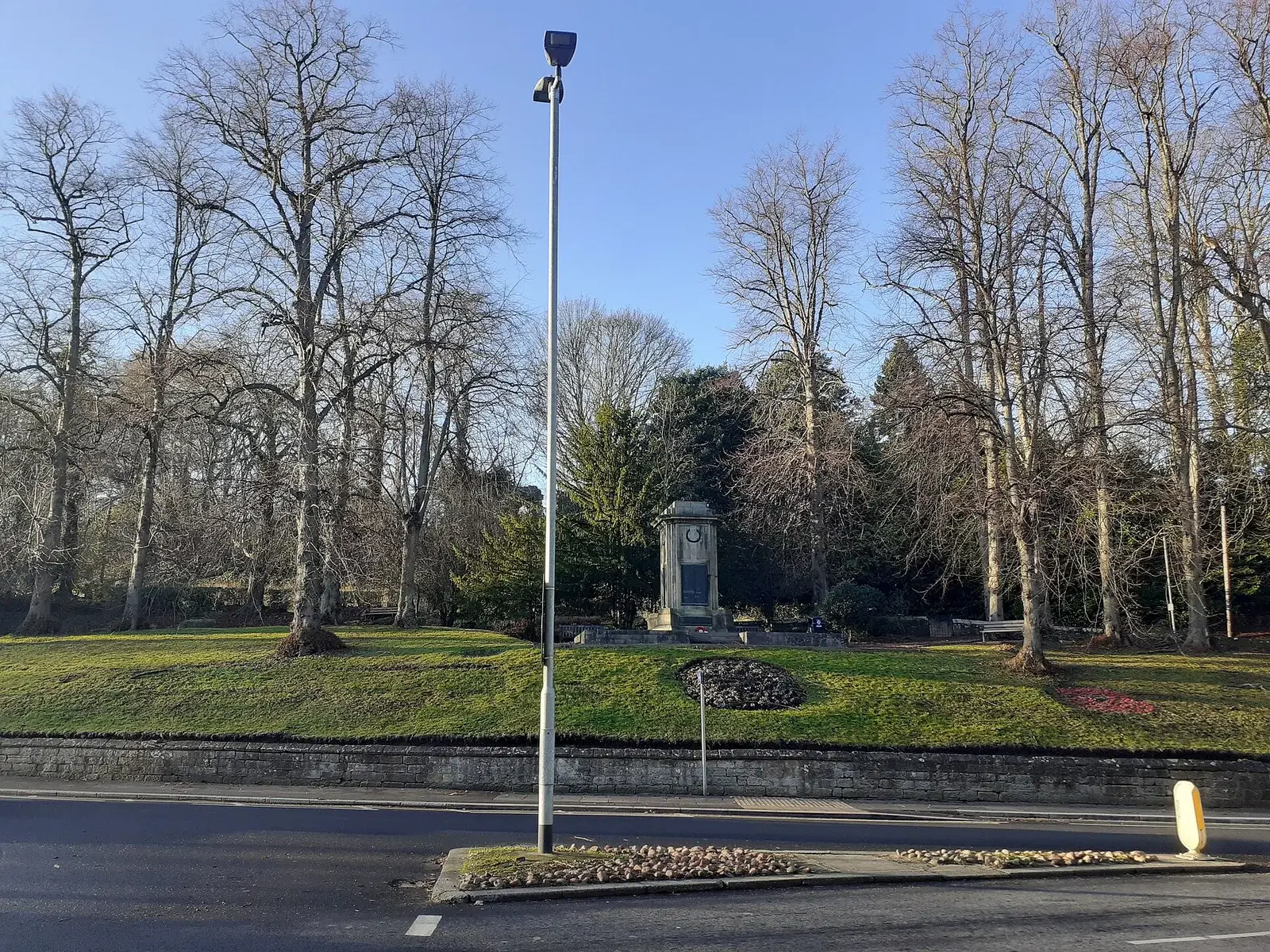
Morpeth's war dead are commemorated on the town's Cenotaph, a Blue York stone memorial that carries the names of 233 men lost in the First World War and 77 in the Second. It stands as the focus of the town's Remembrance each November, a reminder that behind the numbers were families across Morpeth and the surrounding villages who did not see their sons and husbands come home.
The town's long history is kept alive today at the Chantry Bagpipe Museum in the medieval Chantry building by the bridge, and in the streets and buildings that carried on through the war years and stand still. Remembering those years honestly, without exaggeration and without forgetting, is the least a town can do for the people, local and Polish alike, who lived and died through them.
Have a suggestion? Get in touch.
Never miss what’s on
Join the weekly Morpeth.net digest — the best events, news and local tips, straight to your inbox. Free, one email a week.
What's On
October Half Term Crafts at Wallington
11:00 AM - 3:00 PM · Wallington, Cambo, near Morpeth, Northumberland, NE61 4AR
Morpeth Wednesday Market
9:00am - 3:30pm · Market Place, Morpeth, NE61 1HG
Kids Wildlife Photography at Wallington
1:30 PM - 2:45 PM · Wallington, Cambo, near Morpeth, Northumberland, NE61 4AR